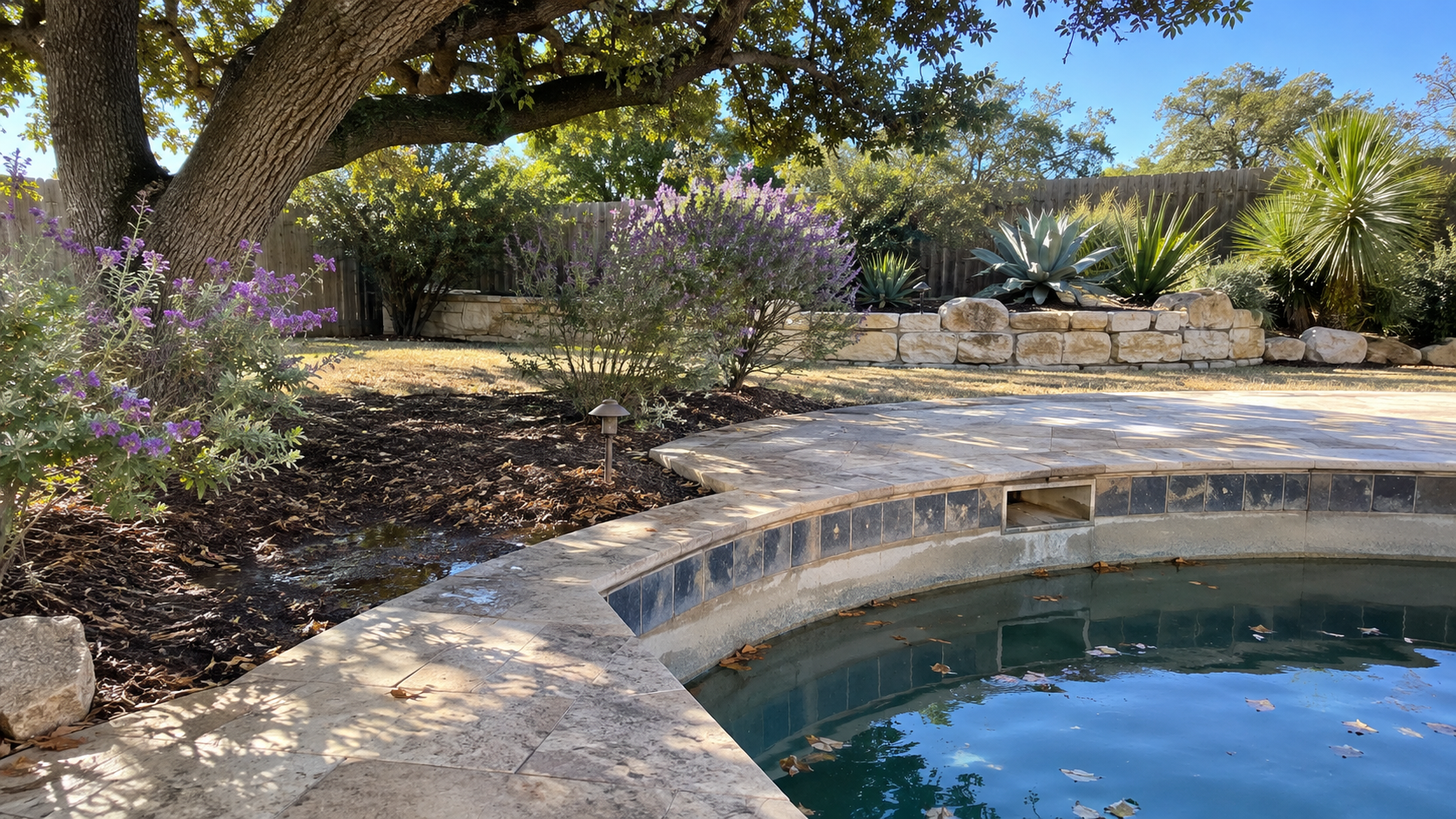
Pool Leak Detection in Leon Valley, TX: What Homeowners Need to Know Your pool dropped again this week, and the weather has cooled off. That is usually the moment Leon Valley homeowners start asking about pool leak detection Leon Valley pool owners can count on. Evaporation slows down in the fall, so steady water loss stands out more than it did in August.
South Texas Pool Leak Detection works with homeowners in Leon Valley and across San Antonio’s northwest side. We find leaks without tearing up your yard, then repair what we find. Here is what to watch for, what causes leaks in this area, and what an inspection actually looks like.
Why Leon Valley Pools Leak Leon Valley is a small city with a lot of established backyards. Many pools here have been in the ground for years, and older plumbing and fittings simply see more wear. Newer pools aren’t immune either, because the ground around them still moves.
Clay Soil That Never Sits Still Much of the San Antonio area sits on expansive clay. It swells after a hard rain, then shrinks and cracks during dry spells. A pool shell and its buried plumbing sit right in the middle of that movement.
Over time, that push and pull stresses pipe joints, fittings, and the shell itself. Our post on how San Antonio’s expansive clay soil damages pool plumbing and shells explains this in more detail.
Live Oaks and Mature Landscaping Leon Valley neighborhoods are full of big live oaks, and many backyards have years of landscaping around the pool. That shade is a gift in July. However, roots and settling beds around a deck can add stress to the lines running underneath.
Mature landscaping also makes digging a bad option. Nobody wants a crew trenching through a yard that took decades to grow in. That is exactly why accurate detection matters so much here.
Signs Your Leon Valley Pool May Be Leaking Some leaks announce themselves. Others hide for months behind an autofill valve. Watch for these warning signs:
The water level keeps dropping even in mild weather, when evaporation should be low.Your water bill is higher than usual, and nothing else in the house has changed.Soggy spots show up in the yard or along the deck, even when it hasn’t rained.Cracks appear in the deck, coping, tile line, or plaster.Air bubbles come out of the return jets , or the pump loses prime more often than it used to.You keep adding chemicals because fresh water keeps diluting the balance.One sign alone doesn’t prove a leak. Two or three together usually mean it is time for a closer look.
Start With the Bucket Test The bucket test is a simple way to compare your pool’s water loss against normal evaporation. Our guide to pool leak detection in South Texas walks through the steps.
If the pool drops more than the bucket over the same stretch of time, something besides evaporation is pulling water out. Write down what you find. Those notes help a technician narrow things down faster.
Where Leaks Usually Hide A pool is more than a big concrete bowl. It is a system of pipes, fittings, and equipment, and any part of it can fail. These are some of the places we check:
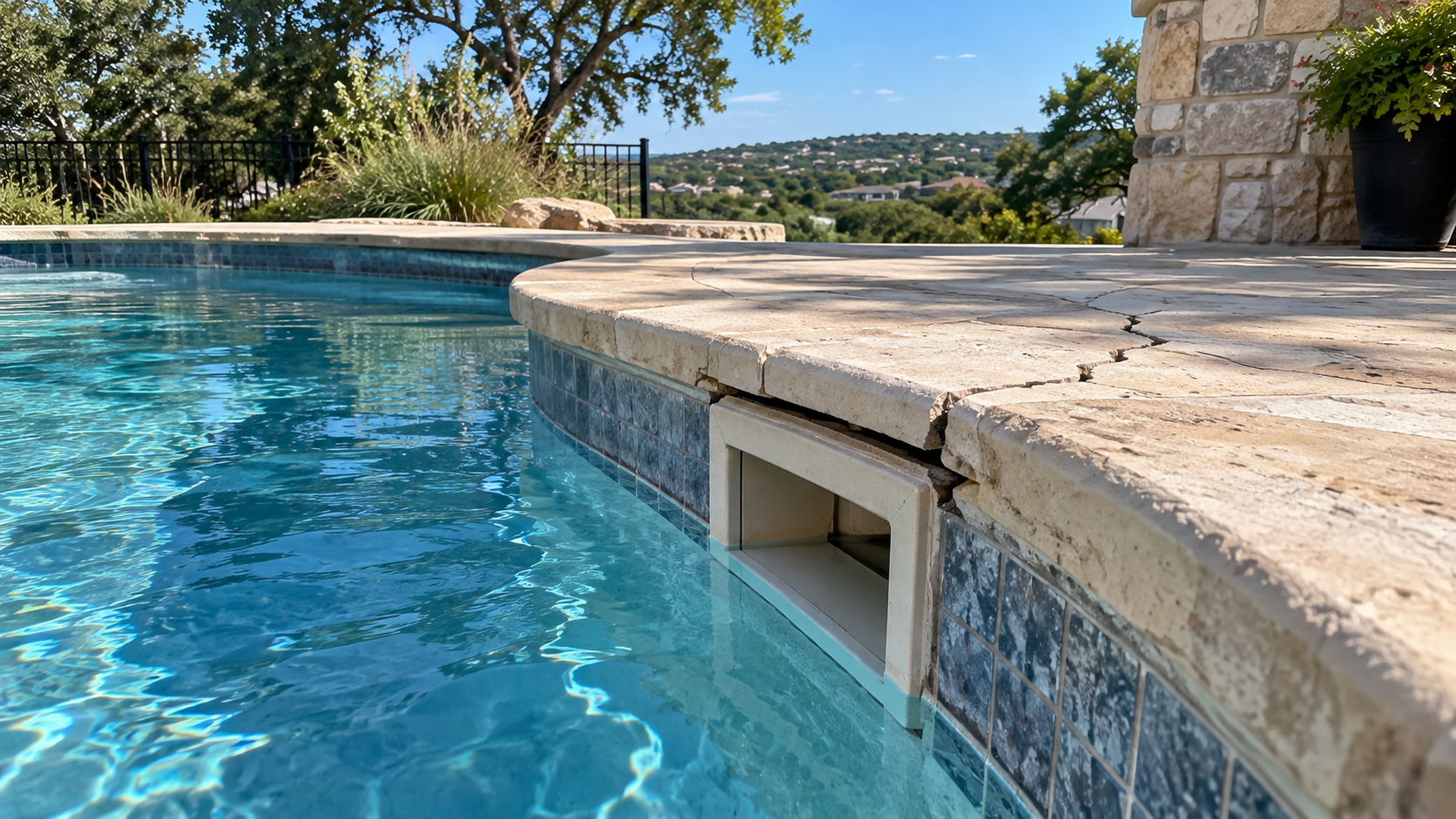
Skimmers. The joint where the skimmer meets the shell takes a lot of stress. Our pool skimmer leak detection post covers this common problem.Return lines. These lines push filtered water back into the pool, and they run underground where you can’t see them. Read more about return line leak repair .Shell cracks. Movement in the ground can open cracks that let water escape through the structure itself.Fittings and lights. Jets, drains, and light niches all create openings in the shell that need a tight seal.Equipment. Leaks at the pump, filter, or valves sometimes get blamed on the pool itself.A Misconception We Hear Often Plenty of homeowners assume a leak has to be somewhere they can see. In reality, the most frustrating leaks are usually buried under the deck or in a line between the pool and the equipment pad.
A dry deck doesn’t mean dry plumbing. Clay soil can soak up a surprising amount of water before anything shows on the surface. As a result, a pressure test often finds what a visual check misses.
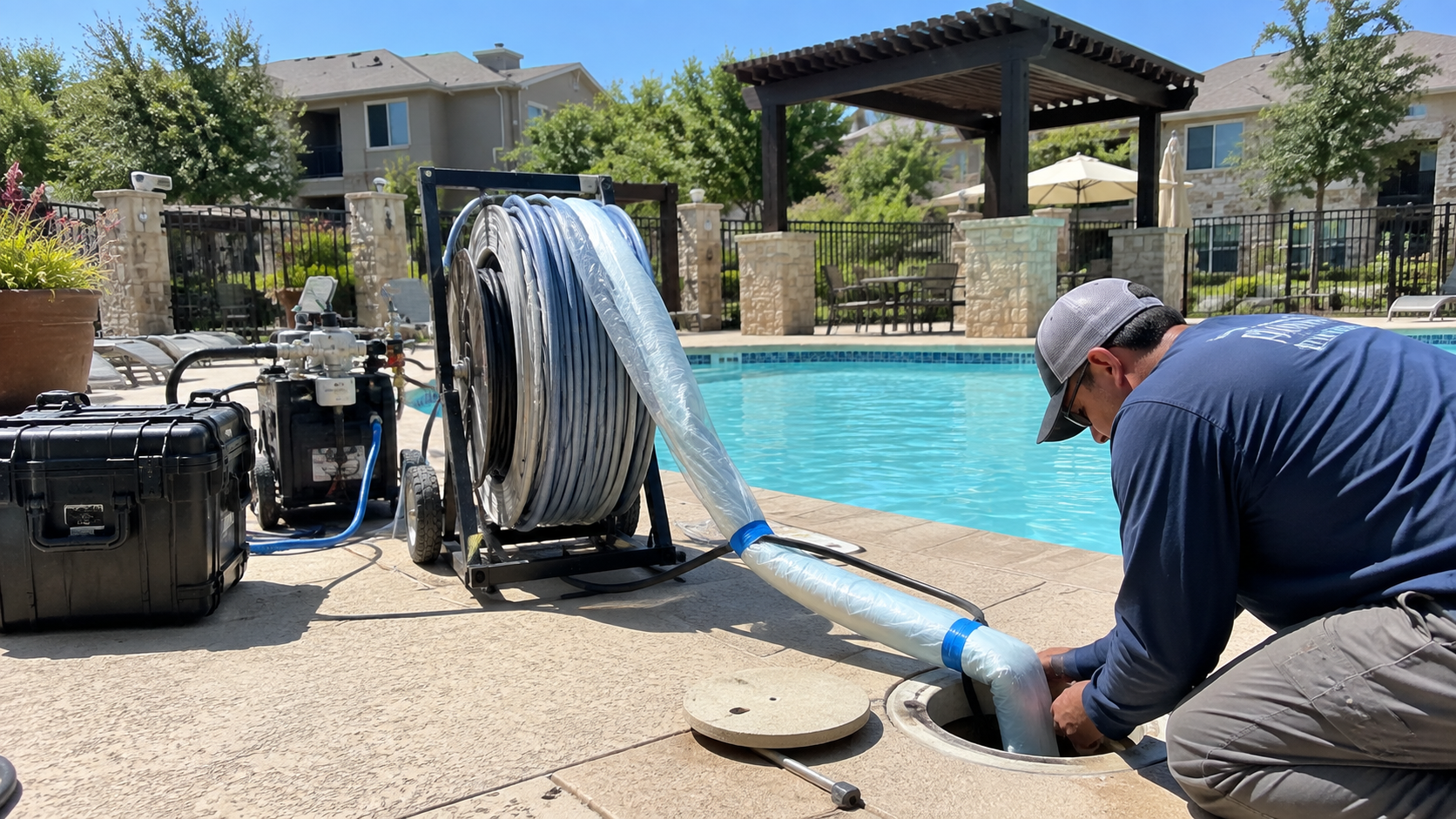
How South Texas Pool Leak Detection Finds the Leak Our pool leak detection process is non invasive. The goal is to pinpoint the source first, so any repair targets only the spot that needs it.
Depending on what we find, an inspection can include:
Pressure testing of the plumbing lines, one line at a time.Dye testing around fittings, cracks, and the skimmer to see where water pulls out.Electronic acoustic listening to hear water escaping through buried pipes.Underwater inspection of the shell, lights, and fittings.Our team uses Leaktronics leak detection equipment. Because we test each line separately, we can tell you whether the problem is in the plumbing, the structure, or both.
Why Testing Line by Line Matters Suppose your yard has a soggy patch near the pool. That spot might come from the pool, or it might come from an irrigation line running through the same bed. Isolating each pool line rules out the guesswork.
Guessing leads to paying for the wrong repair. Accurate testing protects your yard and your budget.
What Happens After the Leak Is Found Finding the leak is only half the job. South Texas Pool Leak Detection also handles the repair, so you don’t have to bring in a second company and explain the problem all over again.
Here is how the repair side typically lines up with what we find:
After a repair, we retest to confirm the fix. That last step matters, because a pool with one leak sometimes has two.
Buying a Home in Leon Valley? A pool can be a big part of a home’s appeal. However, a hidden leak is not something you want to inherit at closing. Our pool inspections look at the structure, leaks, equipment, and safety features, so you know what you are buying.
Why Fall Is a Smart Time to Check Late fall gives you a clearer read on water loss. Cooler days mean less evaporation, so a steady drop is easier to spot. In addition, the pool sees less use, which makes it easier to schedule detection and any repairs.
Fixing a leak now also keeps it from running all winter. A small leak that runs for months can wash out soil, stress the shell, and push your water bill higher. Catching it before spring means you start swim season with a pool that holds water.
Frequently Asked Questions Does South Texas Pool Leak Detection serve Leon Valley? Yes. Leon Valley is part of our regular service area, along with San Antonio and other nearby communities. You can learn more on our Leon Valley service page .
How do I know if my pool is leaking or just evaporating? Run a bucket test by placing a bucket of pool water on a step and comparing the two water levels over the same period. If the pool drops more than the bucket, you likely have a leak. Fall is a good time to test because evaporation is lower.
Will you have to dig up my yard to find the leak? No. Our process relies on pressure testing, dye testing, acoustic listening, and underwater inspection to pinpoint the leak without digging. If a buried line is damaged, trenchless pipe repair can often fix it without excavating your deck or landscaping.
Can clay soil cause a pool to leak? Yes. Expansive clay swells when wet and shrinks when dry, which puts stress on pool plumbing joints, fittings, and the shell. Over time, that movement can open cracks and loosen connections.
Can you repair the leak after you find it? Yes. South Texas Pool Leak Detection repairs plumbing leaks, fitting leaks, shell cracks, and underground pipe damage. We retest after the repair to confirm the leak is fixed.
If your Leon Valley pool keeps losing water, don’t wait for the problem to grow over the winter. South Texas Pool Leak Detection serves homeowners throughout Leon Valley and the greater San Antonio area. Call (210) 570-5033 or book a consultation to find out exactly where your water is going.