Buying a home with a pool in San Antonio is an appealing proposition. The summers here are long and legitimately hot, and a pool transforms a backyard from a patch of grass into something you actually use. What buyers do not always realize until after closing is that pools are complex systems with a lot of ways to go wrong, and a standard home inspection covers them in the most general terms. A pool that looks clean and full during a showing can be hiding thousands of dollars in problems that a cursory walkthrough will not reveal. South Texas Pool Leak Detection has been serving San Antonio and the surrounding communities for over 11 years, and pre-purchase pool inspections are one of the most valuable services the team provides to buyers who want to know exactly what they are getting before they sign. This guide explains what a professional pool inspection covers, what the most common problems look like in San Antonio homes specifically, and how to use the inspection findings to your advantage during the buying process.
Why a Standard Home Inspection Is Not Enough Most home inspectors are generalists. They cover the roof, the foundation, the HVAC system, the electrical panel, the plumbing, and a wide range of systems across the entire home in a single visit. Pools and spas typically receive a basic visual check: the inspector looks at obvious equipment, notes whether the pump runs, checks a few safety features, and moves on.
What a general home inspection almost never covers: pressure testing the plumbing lines for leaks, dye testing returns and fittings, evaluating the structural integrity of the shell, checking for active water loss, or assessing the condition of equipment beyond whether it turns on.
A pool that passes a standard home inspection can still have a slow leak losing hundreds of gallons per week, plumbing lines with compromised sections under the deck, a shell with structural cracks masked by fresh plaster, or equipment that is running but close to failure. None of these problems are visible during a casual visual inspection, and all of them become the buyer's responsibility the moment the sale closes.
A dedicated pool inspection by a certified specialist is the only way to get a complete picture of what you are actually buying.
What South Texas Pool Leak Detection Checks During a Pre-Purchase Inspection A professional pool inspection goes significantly deeper than a visual assessment. Here is what a thorough pre-purchase inspection covers.
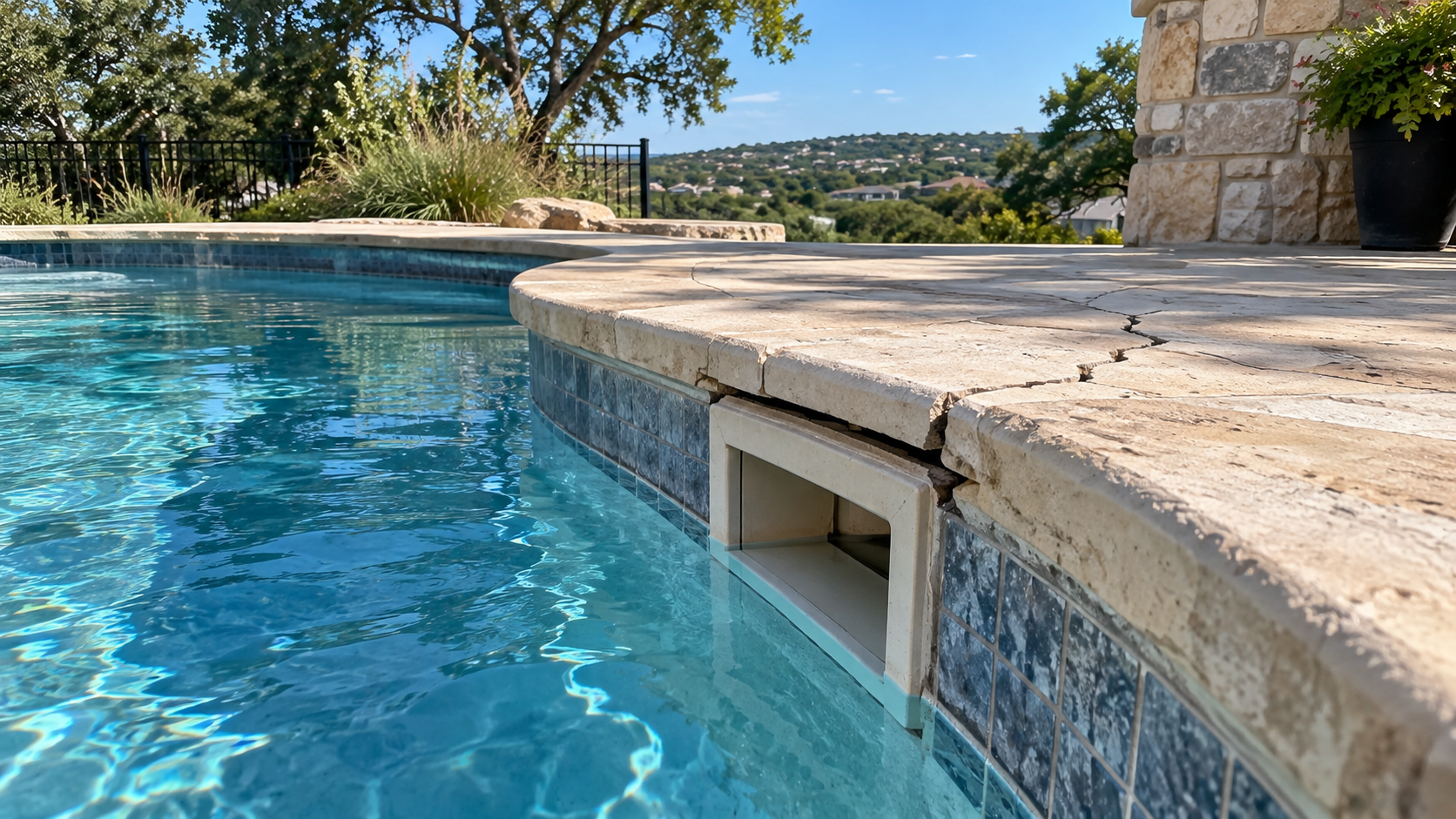
Pool Shell and Surface Condition The inspector examines the pool shell for cracks, spalling, delamination, and surface deterioration. In San Antonio, the expansive clay soil that underlies much of the metro area creates ground movement conditions that stress pool shells over time. Hairline cracks are common and often cosmetic, but cracks that follow the structural seams of the pool or appear at fittings and penetrations can indicate movement that has stressed the shell beyond the surface.
Plaster condition is evaluated for rough patches, staining, and areas where the surface has begun to separate from the shell beneath. A pool that needs replastering is a meaningful near-term expense that should factor into the buyer's offer and budget.
The tile line, coping, and bond beam are checked for cracking, separation, and signs of water intrusion behind the tile.
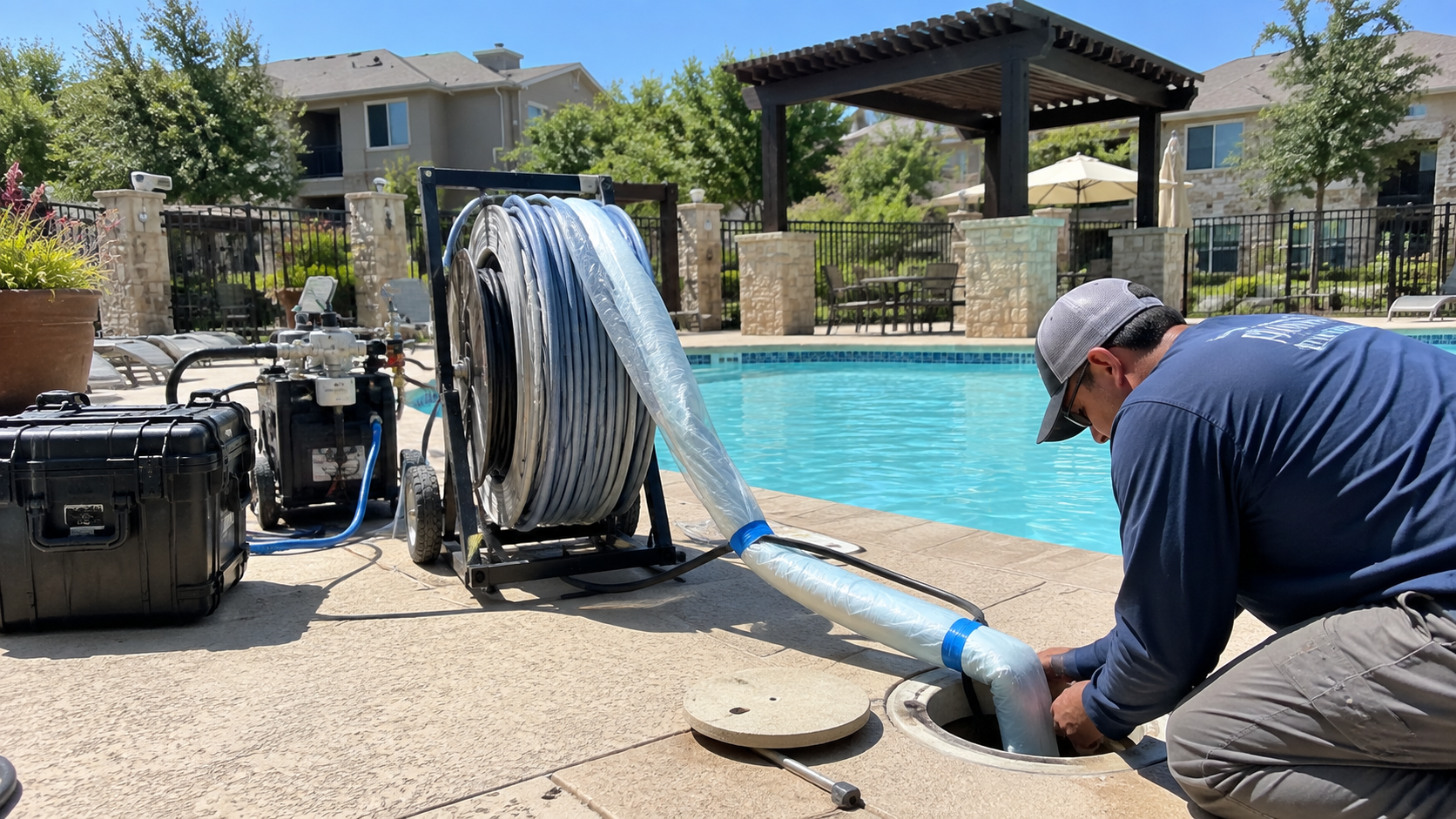
Plumbing Line Integrity This is where a specialist inspection diverges most sharply from a general home inspection. South Texas Pool Leak Detection pressure-tests the plumbing lines to verify there are no active leaks in the underground pipe system. This involves isolating sections of the plumbing and testing them under controlled pressure. If a section drops pressure during the test, it indicates a breach somewhere in that line.
Underground plumbing leaks are common in older San Antonio pools and in any pool where the ground has shifted enough to stress pipe joints. They are invisible from the surface, they lose water continuously, and left unaddressed they saturate the surrounding soil and can undermine the pool deck and surrounding hardscaping over time.
Finding a plumbing leak before closing gives the buyer documented grounds to negotiate a repair credit or require the seller to address it before the sale proceeds.
Equipment Assessment The pump, filter, heater, and any automation equipment are evaluated for condition, age, and function. A pump that runs is not necessarily a pump in good condition. The inspector checks for signs of motor wear, leaking shaft seals, corrosion at fittings, and proper flow rate. Filter condition and media age are noted. Heaters are assessed for proper operation and for signs of heat exchanger corrosion, which is a common failure point in San Antonio's hard water environment.
Equipment age matters significantly. Pool pumps typically last 8 to 12 years. Heaters average 7 to 10 years. A pool with all original equipment in a 15-year-old home is telling you something about what the previous owners invested in maintenance, and it is telling you something about what you will likely be replacing in the near term.
Leak Detection Testing Active water loss testing is one of the most valuable elements of a pre-purchase inspection. The inspector evaluates whether the pool is losing water beyond normal evaporation rates and, if so, performs dye testing at returns, skimmers, main drains, light niches, and other fittings to identify where water is escaping.
In San Antonio's clay soil environment, an undetected leak does not just waste water. It saturates the soil around the pool structure, which then expands and contracts with moisture changes and creates ongoing pressure on the shell and deck. Over years, this cycle causes structural damage that is far more expensive to address than the leak itself would have been.
Safety Equipment Check The inspection covers safety equipment including drain covers, fencing and gate hardware, anti-entrapment features, and GFCI protection at poolside outlets and equipment. Texas has specific requirements for pool safety barriers, and a pool that does not meet current standards may require the buyer to bring it into compliance after purchase.
The age and condition of the bonding and grounding system is also noted. Older pools in particular may have bonding systems that have corroded over time, which is both a safety concern and an electrical compliance issue.
Decking and Surrounding Hardscape The pool deck and surrounding hardscaping are evaluated for cracking, settling, and soft spots that indicate saturation or voids beneath the surface. In San Antonio, deck movement is extremely common because of the expansive clay soil. Cracks radiating from the pool edge or sections of deck that have sunk relative to adjacent areas can indicate ongoing soil movement or an underlying leak that has been saturating the subgrade.
Coping separation from the bond beam is a specific item to check, as this gap allows water to enter behind the tile and accelerate deterioration.
San Antonio-Specific Pool Problems Buyers Should Know About Buying a pool in San Antonio comes with some region-specific considerations that buyers from other markets may not anticipate.
Expansive Clay Soil San Antonio sits on a geology characterized by expansive clay, particularly the black and dark gray soils common in the northern and western parts of the metro. This soil shrinks significantly during dry periods and swells when wet. Pool shells, plumbing lines, and decks are all subject to the movement this soil creates. A pool inspection in San Antonio should specifically evaluate for signs of differential movement, including shell cracks that follow seam lines, plumbing joints that have shifted, and deck sections that have heaved or settled unevenly.
Hard Water Scale Buildup San Antonio's water is notoriously hard, with high calcium and mineral content. In pools, this manifests as calcium scale on the tile line, on heat exchanger components inside heaters, and on plumbing fittings over time. A pool with visible white scale buildup on the tile line that extends well below the waterline has likely had water chemistry management issues. Heavy scale on the tile is a cosmetic issue but expensive to address. Scale inside the heater shortens its lifespan.
Pool Age in Established Neighborhoods San Antonio's established neighborhoods, including Alamo Heights, Olmos Park, Castle Hills, Hollywood Park, and parts of the far north side along 1604, have significant housing stock from the 1970s through the 1990s. Pools in these homes are frequently original to the structure or have received minimal reinvestment over the decades. A pool that has not been replastered in 15 or more years, has original equipment, and has never had a professional leak inspection is a significant risk item for a buyer.
Short-Term Rental Properties The San Antonio market has a meaningful inventory of homes near the River Walk, the Pearl district, and tourist corridors that have operated as short-term rentals. These pools often experience much higher bather loads than residential pools and may have been maintained to a basic standard rather than a thorough one. Equipment wear, chemical imbalance damage to surfaces, and deferred repairs are all more common in heavily used rental pools.
How to Use Inspection Findings During Negotiations A pre-purchase pool inspection report is a negotiating document as much as it is a condition assessment. Here is how buyers typically use it.
Repair credits. If the inspection reveals a plumbing leak, structural cracks, or equipment that needs replacement, the buyer can request a credit at closing to cover the estimated repair cost. The seller avoids having to manage the repair themselves; the buyer gets the funds to address it after closing with a contractor of their choice.
Price reduction. For pools with significant deferred maintenance or multiple issues, a reduction in the purchase price rather than a credit may be the cleaner negotiating approach.
Required repairs before closing. Buyers can require that specific safety deficiencies, such as non-compliant drain covers or broken fencing, be addressed before the sale closes rather than accepting a credit.
Walk away. If the inspection reveals a pool in genuinely poor structural condition, the buyer has documented findings to support canceling the contract during the inspection period rather than inheriting a major problem.
None of these options are available without a documented inspection report. A buyer who skips the inspection and discovers problems after closing has very limited recourse.
When to Schedule the Inspection Schedule the pool inspection during the option period, immediately after going under contract. Most Texas real estate contracts include a standard option period that gives buyers the right to terminate for any reason. Getting the pool inspection done early in that window gives you time to review the findings, get repair estimates if needed, and negotiate before the option period expires.
Do not wait until the end of the option period to schedule. Pool inspection appointments need to be booked in advance, and if the findings require follow-up estimates from repair contractors, you need time for that process.
Coordinate with your real estate agent so the inspection can happen while the pool is accessible and, ideally, while it is full and running. A pool that has been drained or winterized is harder to assess fully.
FAQ: Pre-Purchase Pool Inspections in San Antonio How long does a pre-purchase pool inspection take? A thorough pool inspection including pressure testing, dye testing, equipment evaluation, and shell assessment typically takes two to three hours for a standard residential pool. Larger pools, pools with complex equipment systems, or pools where the initial assessment reveals concerns that require more detailed investigation may take longer.
How much does a pre-purchase pool inspection cost? Pool inspection costs vary based on pool size and scope. A dedicated pool inspection is a separate service from a general home inspection and is priced accordingly. The cost is consistently small relative to what buyers avoid by finding problems before closing rather than after.
Can the seller refuse a pool inspection? During the option period in a Texas real estate transaction, the buyer generally has the right to conduct inspections with reasonable notice to the seller. A seller who refuses inspection access is a significant red flag. Your real estate agent can advise on your contractual rights in the specific transaction.
What happens if the inspection finds a leak? A confirmed leak documented in an inspection report gives the buyer a specific, quantified deficiency to bring to the seller. South Texas Pool Leak Detection can provide findings in a format usable for negotiation. Depending on the location and severity of the leak, the buyer can request a repair credit, require the seller to repair it before closing, or factor it into a price reduction discussion.
Does South Texas Pool Leak Detection serve the suburbs around San Antonio? Yes. South Texas Pool Leak Detection serves San Antonio and the surrounding communities including Leon Valley, Castle Hills, Hollywood Park, Shavano Park, New Braunfels, Cross Mountain, Fair Oaks Ranch, Lakehills, Schertz, and Converse.
Buying a home with a pool is a great decision when you know what you are getting. South Texas Pool Leak Detection provides pre-purchase pool inspections for buyers throughout the San Antonio metro area, with the kind of detail that a general home inspection simply cannot offer. Reach out to schedule your inspection before closing and go into the transaction with a complete picture of the pool's condition.

.webp)